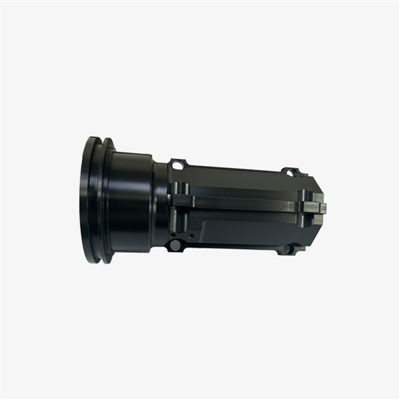
What Is a Turning Fixture?

A turning fixture refers to a dedicated device used on lathes (such as conventional lathes, CNC lathes, or turn-mill centers) to locate, clamp, and support a workpiece during turning operations.
Its core purpose is to ensure that the workpiece is held securely and accurately throughout the turning process, thereby guaranteeing machining accuracy, stability, and repeatability.
Main Functions of a Turning Fixture
Workpiece Clamping & Stability
During the turning process, the workpiece must be reliably and stably fixed to the machine spindle or clamping system to prevent slippage and eccentricity. A stable clamping system is the reference point for every turned workpiece.


Accuracy & Repeatability
During processing, precise positioning and consistent clamping ensure the coaxiality, roundness, dimensional accuracy, and repeatability of the parts, resulting in highly compatible components for assembly.
Productivity & Consistency
A well-designed fixture can enable quick clamping, shorten changeover time, improve overall production efficiency in batch or repetitive orders, reduce human error, and is more suitable for CNC automated production.


Complex & Irregular Machining
Good fixtures often help achieve turning operations for complex parts, irregularly shaped parts, multi-angle parts, eccentric or asymmetrical parts.
Do Turning Fixtures Need to Be Machined on a Machining Center?
In non-standard customized applications, the vast majority of turning fixtures are manufactured using CNC machining centers.

1
Fixture bodies are not rotational parts
They usually feature planar structures, multiple hole patterns, and installation datums. Fundamentally, they are milling-type components and are not suitable for machining solely on a lathe.
2
Extremely high positional accuracy is require
Any geometric or positional error in the fixture will be directly transferred to the machined part.
3
Multi-process manufacturing is typically require
Operations such as milling, drilling, tapping, and finishing are more efficiently and accurately completed on machining centers.
Which Fixture Components Are More Suitable for Turning?
In practical manufacturing, turning fixtures are often produced through a combination of CNC turning and machining center operations:
| Fixture Component Type | Recommended Machining Method |
| Locating pins / locating bushings | CNC lathe |
| Cylindrical clamping elements | CNC lathe |
| Fixture body / base plate | CNC machining center |
| Complex clamping blocks | Machining center / multi-axis machining |
Role of Turning Fixtures in Practical Applications
In real-world projects, a turning fixture is not an isolated component, but a critical part of the overall machining strategy.
For turning fixtures with complex structures or tight tolerance requirements, machining centers are often indispensable manufacturing tools.
In actual production, machining processes such as turning, milling, and drilling are allocated based on functional requirements, rather than relying on a single machine tool to complete all operations.
FAQ

01.What is the fundamental difference between a turning fixture and a general-purpose fixture?
The primary objective of a turning fixture is to ensure coaxial alignment between the workpiece rotational axis and the machine spindle, rather than simply holding the part in place.
Compared with general-purpose fixtures, turning fixtures impose much stricter requirements on concentricity, radial runout, and axial positioning stability.
If fixture datums are improperly designed, acceptable machine tool accuracy alone cannot guarantee final part quality.
02.Must turning fixtures be manufactured using a machining center?
Not all turning fixtures strictly require machining centers. However, when a fixture includes multiple locating surfaces, complex hole patterns, or assembly features, machining centers are far more effective in ensuring relative positional accuracy between critical features.
In engineering practice, turning fixtures are typically produced through a combination of turning, milling, and drilling, rather than relying on a single machine tool.
03.When is a custom turning fixture required?
Insufficient workpiece rigidity after clamping
Complex relationships between datum surfaces and machined features
Stable and repeatable positioning accuracy is required
Standard fixtures cannot simultaneously satisfy clamping requirements and machining tool paths
04.Should fixture accuracy be higher than the accuracy of the machined part?
Although fixtures are not delivered as end products, they determine whether parts are machined under the correct datum system.
If fixture accuracy is insufficient, achieving consistent part precision is impossible-even with high-precision machine tools.

Hot Tags: precision machining fixture molds parts, China precision machining fixture molds parts manufacturers, suppliers, factory, precision fixture design, fixture design in assembly, fixture design for resource management industry, fixture design requirements, testing fixture design, fixture design cae