

We serve corporate customers in many industries, including electronics industry, machinery industry, medical equipment, auto parts and other industries.We are a professional manufacturer of CNC machining parts, committed to providing global customers with high-quality, high-precision customized mechanical parts processing to provide one-stop services, mainly including CNC machining of complex parts, non-standard parts processing, mold parts processing, fixture and custom parts processing, mainly for industrial automation non-standard equipment manufacturing enterprises.
Why Choose Us
Our Team
Our engineering team, comprised of 20 technical professionals, is always ready to provide expert advice.
Workshop Capacity
We have a machine shop equipped with machining centers, allowing us to manufacture prototypes and small batch production parts within days.
Rapid Delivery
Our delivery speed is 30% faster than that of our competitors. For simple projects: prototyping completed in one day. For comnplex projects: prototyping completed.
Quality Control
We strictly adhere to quality management systems to ensure consistent product quality and compliance with expectations.
-
![CNC Milling Fixture]() CNC Milling FixtureCNC milling is a method of cutting the workpiece into the desired shape and size with a computer programmed cutting tool. Common CNC milling clamps include rotary table clamps, vise clamps, fixture
CNC Milling FixtureCNC milling is a method of cutting the workpiece into the desired shape and size with a computer programmed cutting tool. Common CNC milling clamps include rotary table clamps, vise clamps, fixture -
![CNC Turning Fixture]() CNC Turning FixtureCNC turning fixture is a device used for clamping workpiece on CNC lathes. Special devices to ensure machining accuracy and efficiency.
CNC Turning FixtureCNC turning fixture is a device used for clamping workpiece on CNC lathes. Special devices to ensure machining accuracy and efficiency. -
![Precision Machining Fixture Molds Parts]() Precision Machining Fixture Molds PartsAs Dahong precision, we specialize in the manufacture of precision machining fixture molds parts. precision machining fixture molds parts play a vital role in industrial production, ensuring that
Precision Machining Fixture Molds PartsAs Dahong precision, we specialize in the manufacture of precision machining fixture molds parts. precision machining fixture molds parts play a vital role in industrial production, ensuring that -
![CNC Fixture Parts]() CNC Fixture PartsCNC Fixture parts play an important role in the manufacturing industry, being responsible for fixing and machining workpieces on the production line. The role of CNC Fixture parts in modern
CNC Fixture PartsCNC Fixture parts play an important role in the manufacturing industry, being responsible for fixing and machining workpieces on the production line. The role of CNC Fixture parts in modern


Technical Conditions For Fixture Design
●Use of the fixture,the connection between the process of using the fixture and the process before and after.
●The position of the assembled workpiece in the fixture, the workpiece positioning reference, the positioning dimension, and the workpiece joint size are intermediate dimensions (specify machining allowance) or final dimensions.
●When manufacturing and installing the fixture, the loading and unloading direction of the workpiece in the fixture should be considered, and the position of auxiliary equipment such as water and gas pipeline should be considered.
●Put forward the principled opinions on the construction form of the fixture, whether to flip and move, and the positioning of the fixture and the mechanization procedure of the clamp.
●Specify the amount of welding shrinkage of the workpiece to determine the position of the positioning member and the clamping member.
●Standardization and standardization data for welding assembly fixtures, including national standards, enterprise standards, and standardized fixture structure drawings.
Application of Fixture Design
Automotive Industry Applications
As it has been observed in the automotive technology, CNC fixtures play a vital role in upholding accuracy in specific processes mainly machining, assembly and quality check procedures.
Aerospace Industry Applications
In the aerospace industry, CNC fixtures are one of the parts of the assurance work so as to have true precision and quality for every part that is made to be put on aircraft or space vehicles.
Medical Device Manufacturing
In the manufacture of medical devices, the CNC fixtures play an integral role in the accomplishment of the desired precision and quality for various medical applications.
General Requirements of Fixture Design
Deterministic Location
The workpiece is controlled by a comprehensive set of perfectly installed locators for a clearer presentation helping engineers to operate. Establishing errors due to locators and positioning surfaces of a workpiece should be reduced to make the balance perfectly, and accurately between the workpiece and machine coordinate frame.
Total Constraint
Engineers recommend a workpiece to be an utter constrained stage during the entire product engineering process to prevent any kind of movement. The installation of clamps ensures strict security of forces to hold the workpiece still once it is located.

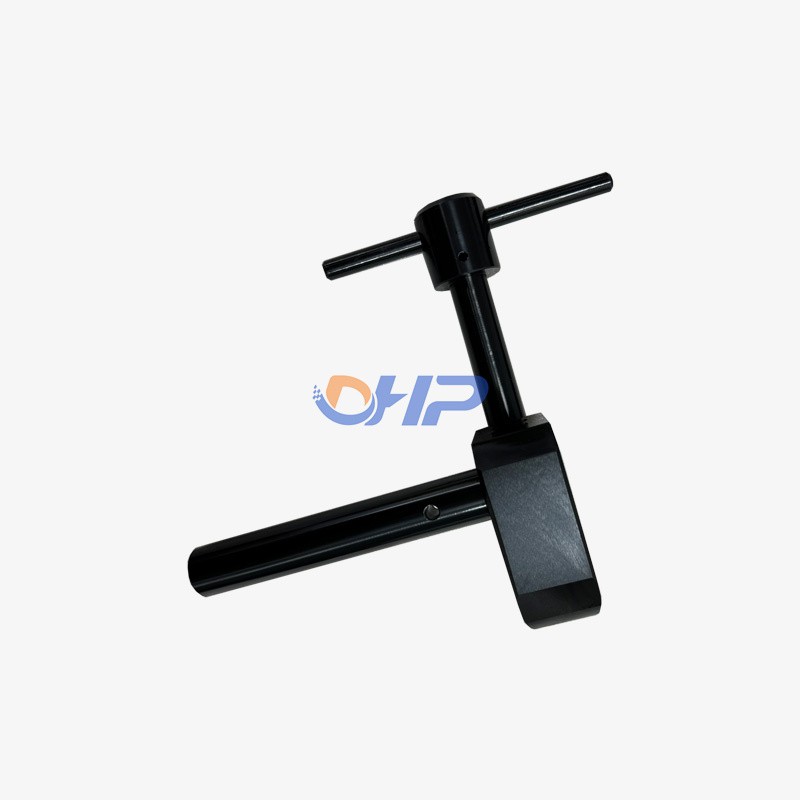
Contained Deflection
Workpiece deformation cannot be neglected because of its elastic/plastic nature and the external forces emerged because of clamping actuation and engineering operations. It is important in fixture design to limit the deformation as per an acceptable magnitude to successfully achieve the tolerance specifications.
Geometric Constraint
Geometric constraint ensures that all the elements that have been fixtured have an easy access to the datum surface. This also helps engineers to ensure that the fixture components do not get in the way with cutting tools during a machining operation.
Design Process of Fixture Design
Analyze the workpiece
Thoroughly examine the workpiece geometry, required tolerances, amount of material removal needed, and other specifications.
Determine locating points
Choose appropriate points on the workpiece to locate it precisely and repeatedly in the fixture.
Design the clamping system
Select clamps, supports, and pressure mechanisms to securely hold the workpiece without deformation.
Add other components
Incorporate additional elements as needed for material handling, chip control, lubrication, safety guards, instrumentation, and more.
Refine and optimize
Evaluate the fixture design via CAD modeling, FEA analysis, machining simulations, and/or prototyping.
Documentation
Create detailed drawings, schematics, setup instructions, and specifications to guide fixture fabrication and use on the shop floor.
Considerations For CNC Fixture Design
Material of the Workpiece
The material that makes up the workpiece determines what kind and types of clamps and locators will work best. Harder materials like steel require more robust clamping, while softer materials need more delicate handling to avoid marking or distortion.
Improves the Tolerance Level
The required tolerance level of the finished part impacts the details of the design in terms of locators and clamps. Higher precision parts need extremely rigid fixturing with more locators to minimize any possibility of movement during machining.
Reference Important Surfaces
Any critical surfaces that will mate or align the work part with other components must be located and clamped to high accuracy. The fixture should grip the workpiece at these key interfaces to ensure they are located and machined properly.
Secure Clamping
The fixture must securely clamp the workpiece in place. If the clamped workpiece shifts during machining, it can lead to errors and scrap parts.
Stability and Rigidity
The fixture itself must be rigid and stable to withstand the forces of the machining operations. If the fixture flexes or vibrates, it will negatively impact the precision and finish quality.
Alignment and Positioning
The fixture must accurately align and position the workpiece in the correct orientation for machining. Misalignment will result in faulty parts. Include guide pins, registers, and stops in the fixture design to properly locate the workpiece.
Material Compatibility
Choose fixture materials that are compatible with the workpiece material. Dissimilar metals in contact can lead to galvanic corrosion. Coatings may be needed when different materials are unavoidable.
FAQ
As one of the most professional fixture design manufacturers and suppliers in China, we're featured by quality products and good price. If you're going to wholesale custom made fixture design, welcome to get quotes from our factory. Also, OEM&ODM service is available.
fixture design advantages, fixture engineering, precision fixture designPopular Products


