

In the manufacturing industry, material selection directly determines the performance of parts, manufacturing costs and product compliance. Whether it is the corrosion resistance requirements of food machinery, the lightweight requirements of aerospace, or the biocompatibility standards of medical equipment, scientific material selection is the starting point of engineering design. This article combines the characteristics of the industry and the properties of materials to provide a systematic material selection guide, helping you find the most suitable materials among metallic and non-metallic materials.

Selection of Metal Materials
Stainless Steel:The king of universal corrosion resistance
Features: Chromium content ≥12%, with excellent corrosion resistance, high strength and easy cleaning. Common models include 304 (general type), 316L (acid and alkali resistant), 430 (magnetic).
Industry adaptation
Food machinery: 316L/304 food-grade stainless steel (certified by FDA/EC 1935) must be selected to avoid chloride ion corrosion and metal ion migration, such as filling valves and sealing parts skeletons.
Medical equipment: 316L stainless steel (also known as "medical stainless steel") is used for surgical instruments and implant casings due to its excellent biocompatibility and needs to meet the ASTM F138 standard.
Chemical equipment: Hastelloy C-276 (nickel-based stainless steel) resistant to strong acids and alkalis, suitable for pump bodies and pipelines in hydrochloric acid and nitric acid environments.
Key points for selection: Pay attention to the tendency of intergranular corrosion (solution treatment is required) and surface roughness (for food contact parts, Ra≤0.8μm).
Aluminum Alloy: The first choice for lightweight
Industry adaptation
Aerospace: 7075-T6 aluminum alloy is used in aircraft structural components to meet the requirements of high strength (tensile strength ≥572MPa) and lightweight.
Electronic manufacturing: 6063 aluminum alloy (easy to machine) is used for heat dissipation shells, and anodizing treatment is combined to enhance insulation and aesthetics.
Automated equipment: 5052-H32 aluminum alloy for guide rails and brackets in humid environments, salt spray test ≥500 hours.
Key points for selection: Pay attention to the heat treatment state (T4/T6 affects hardness) and surface treatment compatibility (such as conductive oxidation vs hard anodizing).
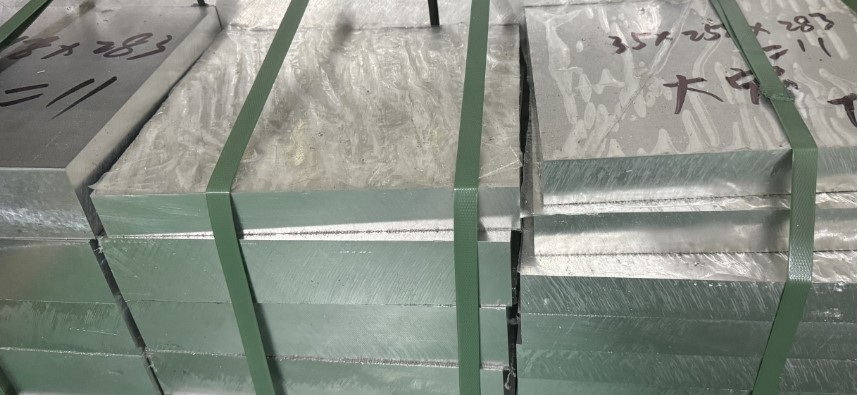
Titanium Alloy: Preferred for extreme environments
Characteristics: Low density (4.5g/cm³), high strength (tensile strength ≥895MPa), high temperature resistance (up to 600℃), typical grades TC4 (Ti-6Al-4V), TA2 (industrial pure titanium).
Industry adaptation
Aerospace: TC4 is used in engine blades and landing gear components to reduce weight while withstanding high stress.
Medical implants: TA2 pure titanium (bioinert) is used for artificial joints and dental implants, in compliance with ISO 5832-2 standards;
Marine equipment: Ti-5Al-2.5Sn is resistant to seawater corrosion and is used for the casing of deep-sea detectors.
Key points for selection: The processing difficulty is high (low-temperature cutting is required), and the cost is 3 to 5 times higher than that of stainless steel. The cost performance needs to be evaluated.
Non-metallic material selection: Matching of functionality and compliance

Engineering Plastics: Functionality
PEEK (Polyetheretherketone)
Features: Temperature resistance up to 260℃, high strength (tensile strength 90MPa), self-lubrication, and compliance with FDA food contact standards.
Application: High-temperature sealing rings for food machinery (replacing metal), sterilized grade gears for medical equipment (resistant to repeated high-pressure steam).
POM (Polyoxymethylene)
Characteristics: High rigidity (elastic modulus 2.8GPa), low friction coefficient (0.15-0.3), food-grade POM can come into contact with fatty foods.
Application: Transmission gears of packaging machines (silent and wear-resistant), precision sliders of medical devices (accuracy ±0.02mm).
PTFE (Polytetrafluoroethylene) :
Characteristics: Temperature resistance -200 ℃ to 260℃, non-stick surface (surface energy 19mN/m), compliant with USP Class VI medical standards.
Application: Valve seals for pharmaceutical equipment (without precipitates), corrosion-resistant gaskets in the semiconductor industry.
Rubber: Sealing and shock absorption core
Food-grade silicone
Characteristics: Non-toxic and odorless, low-temperature resistant (-50℃), and certified by LFGB/NSF 51.
Application: Sealing rings for beverage filling machines, accessories for baby bottles.
Fluorine rubber (FKM)
Features: Temperature resistance up to 200℃, fuel resistance, suitable for automotive engine seals.
Key points for selection: The medical industry should choose medical-grade silicone rubber (such as Dow Corning 360) to avoid the migration of additives.
A guide to Selecting materials for industry scenarios
Food machinery industry: Safety and compliance come first
Food contact components: 316L stainless steel (surface polished Ra≤0.4μm), food-grade POM, FDA silicone must be selected.
High humidity and high temperature environment: Avoid ordinary carbon steel (rust risk), and prefer 304L stainless steel with passivation/nickel plating surface treatment.
Medical devices: Biocompatibility is preferred
Implants: TC4 titanium alloy (no nickel release) and ultra-high molecular weight polyethylene (UHMWPE, wear-resistant) are preferred.
In vitro equipment: Medical-grade ABS (such as the casing of GE medical equipment), PC (transparent and impact-resistant, in compliance with ISO 10993).
Aerospace industry: Balancing weight reduction and reliability
Structural components: 7075-T6 aluminum alloy (reducing weight by 60% by replacing steel parts), titanium alloy (for use in high-temperature areas).
Bearing components: Ceramic ball bearings (with a density 60% lower than that of steel and a service life extended by three times).
Process requirements: It is necessary to pass the AMS (Aviation Materials Specification) certification, such as AMS 4928 titanium alloy sheet.
Electronic manufacturing industry: Excellent in both electrical conductivity and heat dissipation
Heat dissipation components: 6063 aluminum alloy (thermal conductivity 205W/m · K), copper alloy (red copper thermal conductivity 401W/m · K, used for high-frequency devices).
Insulating components: Bakelite (phenolic resin, arc resistant for 120 seconds), FR-4 epoxy board (flame-retardant V-0 grade).
Precision parts: PEEK (as an alternative to metal for micro gears to reduce electromagnetic interference).
3-step precision: Select the optimal material
1,Working condition analysis: Determine the temperature (-40℃ to 200℃?) Humidity (moist vs dry), corrosiveness (acid and alkali concentration), load (static load vs alternating load).
2,Performance priority: Ranked by core industry demands - Food machinery (compliance > corrosion resistance > strength), aerospace (strength > weight > high-temperature resistance).
3,Cost:Small batch (5-50 pieces) : Aluminum alloy (easy to process) and POM (good cutting performance) are preferred.
Common Misunderstandings and Tips to Avoid Pitfalls
Misconception 1: "Stainless steel must be resistant to all corrosion" - 304 stainless steel is prone to pitting corrosion in seawater and needs to be upgraded to 316L or titanium alloy.
Misconception 2: "Plastic is not as strong as metal" - The tensile strength of PEEK is close to that of aluminum alloy, and it has the insulation advantage of non-metallic materials.
Pitfalls to avoid: Require suppliers to provide material certifications to prevent passing off inferior products as good ones (such as 201 stainless steel being passed off as 304).
From the safety and compliance of food machinery to the extreme performance of aerospace, from the biocompatibility of medical equipment to the precise adaptation in electronic manufacturing, every material selection is a deep understanding of industry demands. By systematically assessing working conditions, performance, cost and compliance, enterprises can not only avoid the risk of "project failure due to the wrong selection of materials", but also achieve product differentiation through material innovation.

Let's Make Something Extraordinary Together
At Dahong Precision, we are more than just a CNC machining supplier, we are your partner in precision manufacturing. Whether you need simple parts or highly complex parts, our 3, 4 and 5 axis CNC machining services deliver the quality and reliability you deserve. Contact us today to discuss your project and find out how we can help you achieve your goals.


