

As a senior CNC engineer at Dahong Precision, I have participated in numerous projects involving the production of high-performance engine components using Computer Numerical Control (CNC) machining. Whether in automobiles, aircraft, or industrial machinery, engine components are the core of any power system, and the precision and quality of the engine directly impact the performance of your vehicle or equipment. In this guide, I will walk you through the fundamentals of CNC machining for engine components and apply our expertise to provide practical insights for engineers, designers, and businesses. Continue reading to learn more.
What is CNC Machining?
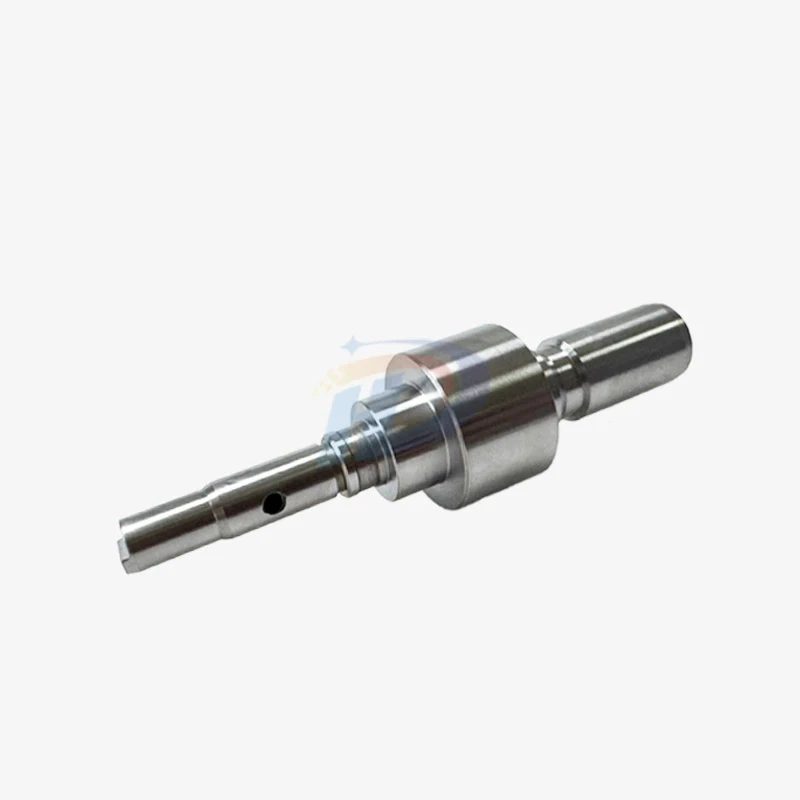
CNC machining is a subtractive manufacturing method where computer-controlled machines remove material from a workpiece to create precise parts. By interpreting programmed instructions, known as G-code, these machines control tools with exceptional accuracy, achieving tolerances as tight as ±0.005 mm. This precision makes CNC ideal for producing complex engine components that demand exact geometries and smooth surface finishes.
Unlike manual machining, CNC offers automation, repeatability, and efficiency, reducing human error and ensuring consistent quality across batches. Its versatility spans industries like automotive, aerospace, and medical, where engine parts require both intricate designs and robust performance. At Dahong Precision, we leverage state-of-the-art CNC systems to meet these demands, delivering parts that power the world's most advanced machinery.
CNC Machining Processes for Engine Parts
CNC machining encompasses various processes, each tailored to specific engine components and their functional requirements. Below, I outline the key techniques we use at Dahong Precision, highlighting their applications and benefits.
CNC turning involves rotating a workpiece against a stationary cutting tool, making it perfect for cylindrical parts like crankshafts, camshafts, and flywheels. This process excels at creating smooth, concentric surfaces and precise diameters, critical for components enduring high rotational forces. For instance, when machining a crankshaft, we achieve tolerances of ±0.005 mm, ensuring balance and durability. Turning also allows us to craft complex features like grooves or threads, enhancing part functionality.
Milling
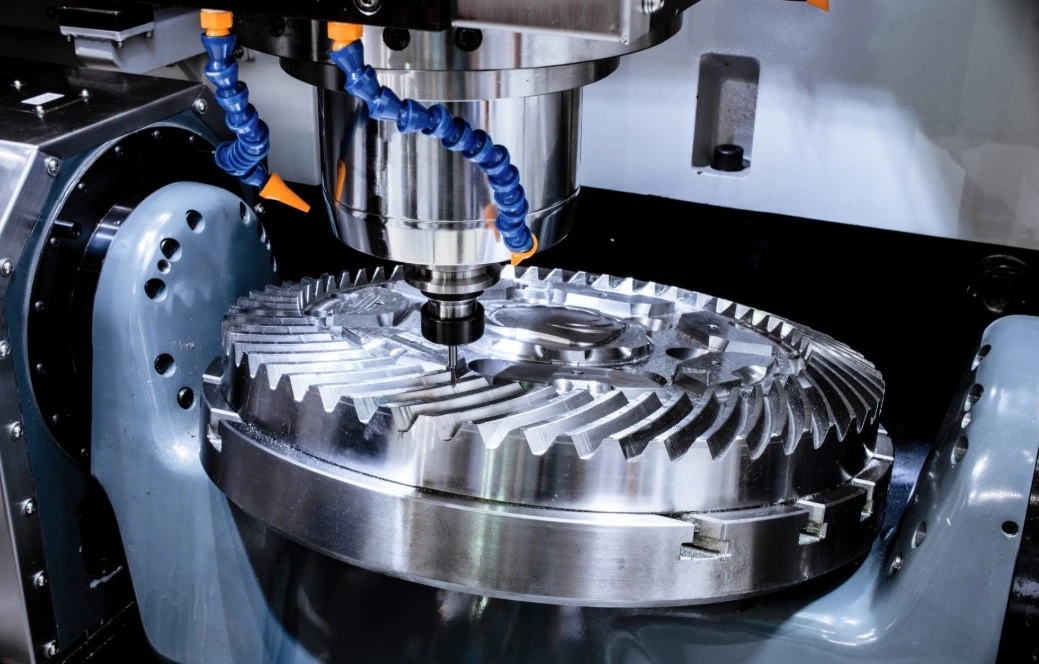
CNC milling uses rotating cutting tools to shape complex geometries, such as the cooling channels in cylinder heads or pockets in intake manifolds. With multi-axis machines, we can create intricate contours and combustion chambers that optimize engine performance. Milling's versatility makes it indispensable for parts requiring detailed surface features, delivering both precision and aesthetic quality.
Drilling
Drilling creates precise holes for oil galleries, coolant passages, or mounting bolts in components like cylinder blocks. Using specialized drill bits, we ensure straight, accurate holes, often as a starting point for further refinement. This process is critical for ensuring proper fluid flow and structural integrity in engine assemblies.
Boring
Boring enlarges pre-existing holes with single-point tools, achieving exact dimensions for parts like cylinder blocks. With precision up to 0.0025 mm, boring ensures perfect fits for pistons or bearings, supporting advanced engine designs with features like tapered or stepped bores.
Grinding
Grinding is a finishing process that uses abrasive wheels to achieve ultra-smooth surfaces on parts like valve seats or camshafts. By removing minute amounts of material, we attain surface roughness as low as Ra 0.1, reducing friction and enhancing performance. Different grinding methods, such as cylindrical or surface grinding, cater to specific component needs.
Honing
Honing refines cylinder bores using abrasive stones, creating crosshatch patterns that improve oil retention and reduce wear. This process ensures precise dimensions and surface texture, allowing piston rings to seat correctly for optimal efficiency. Honing is particularly valuable for hydraulic components and precision bearings.
Lapping
Lapping employs abrasive slurry to produce mirror-like finishes on critical surfaces, such as valve seats or pistons. With material removal controlled to 0.0005–0.005 inches per pass, lapping enhances sealing and performance, ensuring parts meet stringent specifications.
Electrical Discharge Machining (EDM)
EDM uses electrical discharges to shape hard metals, ideal for complex parts like turbine blades or fuel injector nozzles. This non-traditional method allows us to cut intricate cavities and contours that conventional tools can't handle, delivering precision for high-performance applications.
Each process removes material strategically to cut and shape parts, ensuring they meet the exacting standards of modern engines. By combining these techniques, we produce components that are both functional and durable.
Materials for CNC-Machined Engine Parts
Material selection is crucial for balancing performance, weight, and cost in engine components. At Dahong Precision, we work with a range of materials tailored to specific applications:
Aluminum Alloys (6061, 7075): Lightweight and corrosion-resistant, aluminum is ideal for pistons and cylinder heads in automotive engines. Its excellent heat dissipation enhances efficiency.
Stainless Steel (304, 316): Known for durability and heat resistance, stainless steel suits exhaust manifolds and valves, ensuring longevity under extreme conditions.
Titanium: Strong yet lightweight, titanium is used for high-performance parts like connecting rods in racing engines, reducing weight without sacrificing strength.
Cast Iron: With superior wear resistance and thermal stability, cast iron is a go-to choice for engine blocks, providing robust structural support.
To enhance durability, we offer surface treatments like anodizing for aluminum, electroplating or PVD for stainless steel, and passivation for copper. These treatments improve wear resistance, corrosion protection, and aesthetics, ensuring parts perform reliably. Our team guides clients in selecting materials and finishes that align with their project goals, optimizing both performance and cost-efficiency.
Advantages of CNC Machining for Engine Parts
CNC machining offers distinct benefits that make it the preferred method for engine part production. Here's why it stands out:
- Unmatched Precision: Tolerances as tight as ±0.005 mm ensure perfect fits, critical for parts like pistons and cylinder heads. This precision boosts performance and reduces wear.
- Complex Geometries: Multi-axis machines handle intricate designs, such as cooling channels or turbine blades, enabling innovative engine architectures.
- Consistency and Repeatability: Automated controls ensure every part matches the first, eliminating variations common in manual machining. This is vital for mass production.
- Efficiency: CNC reduces lead times through automation, minimizing downtime and speeding up delivery. At Dahong Precision, our 24-hour machining centers produce prototypes in as little as one day.
- Cost-Effectiveness: By minimizing material waste and labor, CNC lowers long-term costs. Optimized tool paths and batch production further enhance savings.
- Flexibility: CNC supports both small-batch prototyping and high-volume production, adapting to diverse project needs without sacrificing quality.
These advantages make CNC machining a cornerstone of modern engine manufacturing, delivering parts that meet the highest standards.
Challenges and Solutions in CNC Machining
While CNC machining is powerful, it comes with challenges that require expertise to overcome:
- High Initial Investment: CNC equipment and software demand significant upfront costs. At Dahong Precision, we offset this by offering cost-effective services, leveraging our advanced infrastructure to serve clients of all sizes.
- Tool Wear: Continuous machining can degrade tools, affecting accuracy. We use high-quality carbide and diamond-coated tools, paired with real-time monitoring, to maintain performance and minimize downtime.
- Programming Complexity: Creating G-code for complex parts requires skilled programmers. Our team's expertise in CAD/CAM software ensures precise tool paths, reducing errors.
- Workpiece Stability: Improper fixturing can cause vibration or deformation. We employ strategic clamping and custom fixtures to secure parts, ensuring accuracy even for thin-walled components like intake manifolds.
- Thermal Management: High-speed machining generates heat, risking material distortion. We apply coolants and select heat-resistant materials like stainless steel, often enhanced with coatings like DLC or Teflon.
By addressing these challenges, we deliver flawless parts that meet your specifications, on time and within budget.
Design and Machining Considerations
Effective CNC machining starts with thoughtful design. Here are practical tips to optimize your engine parts for manufacturability:
- Balance Tolerances: Specify tight tolerances (±0.005 mm) only where necessary, such as piston-cylinder interfaces. For less critical features, ±0.01 mm often suffices, reducing costs.
- Incorporate Fillets: Add rounded corners (e.g., 1 mm radius) to minimize stress concentrations and extend tool life during milling or turning.
- Maintain Wall Thickness: Avoid walls thinner than 1 mm to prevent deformation. For lightweight parts, consult our team to balance strength and weight.
- Use Standard Features: Opt for standard hole sizes or thread profiles to streamline machining and lower setup costs.
- Leverage CAD Tools: Software like SolidWorks or Fusion 360 ensures accurate models, which our programmers translate into efficient G-code for seamless production.
Collaborating with Dahong Precision early in the design phase allows us to refine your models, enhancing manufacturability and saving time. Our engineers provide feedback to align your vision with practical machining realities.
Why Choose Dahong Precision for CNC Machining?
At Dahong Precision, we're more than a CNC machining service-we're a partner in your success. Here's what sets us apart:
- Comprehensive Solutions: From turning and milling to surface treatments like anodizing or electroplating, we offer one-stop processing, ensuring quality at every step.
- Rapid Delivery: Our 24-hour machining centers deliver prototypes in one day for simple projects and three days for complex ones, 30% faster than competitors.
- Uncompromising Quality: Every part undergoes 100% dimensional inspection, adhering to ISO 9001 standards. Our surface roughness (Ra 0.1~3.2) and tolerances (±0.005 mm) meet the strictest requirements.
- Industry Expertise: With years serving automotive, aerospace, and medical sectors, we understand the unique demands of engine components.
- Customer-Centric Approach: Our project team supports you from design to delivery, offering video factory tours or in-person visits to showcase our capabilities.
Whether you need a single prototype or a large batch, we turn your designs into reality with precision and efficiency.
Conclusion
CNC machining is the backbone of engine part production, delivering the precision, versatility, and efficiency needed for high-performance components. By mastering processes like turning, milling, and honing, and selecting materials like stainless steel or titanium, we create parts that power the world's most demanding engines. Despite challenges like tool wear or programming complexity, our expertise at Dahong Precision ensures flawless results.
Do you need custom CNC Machining Engine Parts ? Contact Dahong Precision immediately, submit your CAD files, request a quote or discuss your project. Our senior engineers will respond to your inquiry within 12 hours.
FAQs
What engine parts can CNC turning process?
CNC turning is ideal for parts like crankshafts, camshafts, connecting rods, cylinder blocks, flywheels, and turbocharger components. These parts benefit from precise cylindrical features and smooth finishes.
How does CNC machining compare to additive manufacturing for engine parts?
CNC machining offers superior strength, precision, and surface finishes, making it ideal for functional engine components. Additive manufacturing suits prototyping or complex, low-volume parts but lacks CNC's durability for production.
How do you ensure quality in CNC-machined engine parts?
We perform 100% dimensional inspections, adhere to ISO 9001, and use advanced metrology tools to verify tolerances (±0.005 mm) and surface roughness (Ra 0.1~3.2). Comprehensive reports guarantee defect-free parts.
What tolerances and surface finishes can CNC achieve?
Our CNC machines achieve tolerances of ±0.005 mm and surface roughness from Ra 0.1 to 3.2, tailored to your part's material and geometry.

Let's Make Something Extraordinary Together
At Dahong Precision, we are more than just a CNC machining supplier, we are your partner in precision manufacturing. Whether you need simple parts or highly complex parts, our 3, 4 and 5 axis CNC machining services deliver the quality and reliability you deserve. Contact us today to discuss your project and find out how we can help you achieve your goals.


