

Low volume CNC machining is highly suitable for complex parts with high precision requirements. Moreover, for purchasers who need small-batch customization, this flexible manufacturing process is undoubtedly a very appropriate choice. However, there are also many challenges to overcome in small-batch CNC machining. For both purchasers and manufacturers, it is very important to have a comprehensive understanding of what small-batch CNC machining is. As a manufacturer with over 10 years of experience in manufacturing precision mechanical parts, we are well aware of its advantages and challenges. In this guide, we will comprehensively explore the basic guidelines for small-batch CNC machining. Keep reading to learn more.
What is Low Volume CNC Machining?
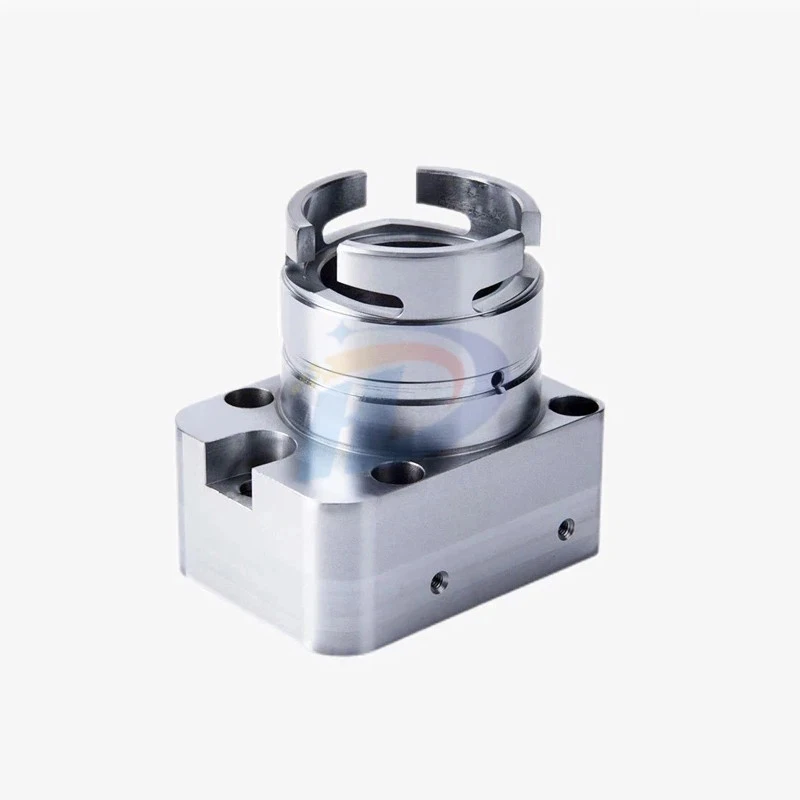
Low volume CNC machining is a precision manufacturing process tailored for producing small to medium quantities of parts, typically ranging from 10 to 10,000 units. Unlike high volume production, which relies on economies of scale, low volume manufacturing focuses on flexibility and cost efficiency for smaller batches. It leverages computer numerical control (CNC) machines to create parts with high accuracy by removing material from a solid block using cutting tools.
This approach is ideal for:
- Prototype development: Creating functional prototypes for testing and validation.
- Small batch trial production: Testing market demand before scaling up.
- Custom parts: Manufacturing specialized components for niche applications.
- Niche products: Catering to unique or limited-run product demands.
By bridging the gap between prototyping and full-scale production, low volume CNC machining offers a cost-effective solution for businesses needing custom designs without the high upfront costs of mass production.
Advantages of Low Volume CNC Machining
Low volume CNC machining provides several key benefits, making it a go-to solution for startups, product designers, and industries requiring flexibility. Here's why it stands out:
- No high tooling costs: Unlike injection molding or other mass production methods, low volume CNC machining eliminates the need for expensive molds, reducing upfront investment.
- Fast delivery: With minimal setup time, it shortens the production process and accelerates time-to-market, critical for rapid prototyping and market testing.
- Design flexibility: Supports multiple iterations of complex designs, allowing engineers to refine products without significant cost penalties.
- High precision: Achieves tight tolerances (e.g., ±0.005 inches), making it suitable for parts requiring tight tolerances in industries like aerospace, medical, and automotive.
- Wide material selection: Offers versatility with materials like aluminum, brass, ABS, and PEEK, balancing material selection for strength, aesthetics, and cost.
- Reduced inventory risk: Produces only what's needed, aligning with demand and minimizing excess stock.
- Supply chain resilience: Enables agile responses to market fluctuations or supply chain uncertainties, supporting flexible production.
These advantages make low volume CNC machining a strategic choice for businesses aiming to optimize time and cost while maintaining quality.
Typical Applications of Low Volume CNC Machining
Low volume CNC machining shines in scenarios where flexibility, precision, and speed are critical. Common applications include:
- Prototyping for new product development: Engineers and designers use it to create and test prototypes, ensuring functionality before committing to larger runs.
- Small batch customization: Ideal for producing specialized parts, such as medical device components or high-performance automotive parts, tailored to specific requirements.
- Market validation for startups: Enables startups to produce limited runs to gauge market interest without heavy investment in high volume production.
- Flexible, multi-variety production: Supports diverse, small-batch production runs, catering to niche markets or custom orders with varying specifications.
This versatility makes low volume CNC machining a critical tool for industries needing custom parts or rapid iteration.

How to Optimize Design to Reduce Machining Costs
Effective design tips can significantly lower the product cost in low volume CNC machining. By adhering to Design for Manufacturability (DFM) principles, you can streamline the production process and minimize expenses:
- Use standard dimensions: Opt for standard hole sizes, fillets, and radii to avoid the need for custom cutting tools, reducing both cost and lead time.
- Set reasonable tolerances: Avoid overly tight tolerances unless functionally necessary, as they increase machine time and inspection costs.
- Limit cavity depth and thread length: Deep cavities or long threads extend machining time, so keep them to a minimum to reduce setup time.
- Avoid overly thin or tall structures: Maintain minimum wall thicknesses (e.g., ≥0.8mm for metals, ≥1.5mm for plastics) to ensure stability and reduce machining errors.
- Minimize non-essential post-processing: Skip decorative features like engraving or excessive surface treatments unless critical, opting for cost-effective alternatives like laser etching.
- Plan for post-processing early: Design with finishing or assembly in mind to avoid costly rework, ensuring compatibility with downstream processes.
By optimizing complex designs, you can achieve a balance between functionality and cost efficiency.
Choosing the Right Materials for Low Volume CNC Machining
Material selection is a critical factor in balancing cost effective production, performance, and aesthetics. Here are key considerations:
- Recommended materials: Common choices include aluminum (lightweight, machinable), brass (corrosion-resistant, aesthetic), ABS (cost-effective plastic), and PEEK (high-performance for demanding applications). These materials offer a good mix of machinability, strength, and cost.
- Balancing key factors: Select materials based on machinability, strength, appearance, and cost. For example, aluminum is widely used for its ease of machining and affordability, while PEEK is ideal for high-strength applications but more expensive.
- Avoid high-cost materials: Unless required for specific properties, steer clear of materials like titanium, which are harder to machine and significantly increase raw material costs.
Choosing the right material ensures efficient machining while meeting functional and budgetary needs.
Selecting the Right Equipment for Low Volume CNC Machining
Choosing the appropriate CNC equipment is essential for efficient low volume production. Here's what to consider:
- Machine types: Select from milling machines (for flat or complex surfaces), lathes (for cylindrical parts), or five-axis machines (for intricate complex designs). The part's geometry dictates the best machine type.
- Key parameters:
- Spindle speed: Higher RPMs suit softer materials like aluminum, while higher torque is needed for harder materials.
- Tool capacity: Machines with automatic tool changers (ATC) reduce setup time and improve efficiency.
- Repeatability and accuracy: Ensure high precision for parts requiring tight tolerances.
- Worktable travel: Confirm the machine's work envelope accommodates part dimensions.
- Control system: User-friendly interfaces with CAD/CAM integration streamline programming and reduce errors.
- Ideal equipment for low volume: Machines with quick tool change capabilities, multi-tasking functionality, and intuitive interfaces are best suited for small batch runs, minimizing machine time and setup costs.
By matching equipment to part requirements, you can optimize both time and cost in low volume CNC machining.
Practical Strategies to Improve Efficiency and Reduce Costs
To make low volume CNC machining cost effective, implementing strategies that optimize the production process can significantly reduce time and cost. Here are proven approaches to enhance efficiency:
- Optimize tool paths: Use advanced CAM software to streamline cutting tools paths, minimizing non-cutting (air-cut) time. This reduces machine time and wear on tools, lowering overall costs.
- Batch similar parts: Group parts with similar geometries or material requirements to minimize setup changes. This reduces setup time and maximizes machine utilization.
- Use quick-change or modular fixturing systems: Employ rapid-clamping fixtures or modular setups to speed up part loading and unloading, reducing downtime between runs.
- Implement lean production principles: Adopt Just-In-Time (JIT) manufacturing and frequent small-batch runs to align production with demand, minimizing inventory costs and waste.
- Leverage pre-production simulation: Use CAD/CAM tools and CAM simulations to validate tool paths and detect potential issues before machining begins. This prevents costly errors and ensures efficient production processes.
These strategies collectively reduce product cost while maintaining quality, making low volume CNC machining more competitive.

Challenges in Low Volume CNC Machining and How to Address Them
While low volume CNC machining offers flexibility, it comes with challenges that can impact time and cost. Here's how to tackle them:
Challenge: High setup costs
Setup and debugging for small runs can be costly relative to the number of parts produced.
Solution: Standardize workflows and use modular fixturing to reduce setup time and costs.
Challenge: Low tool utilization
Tools may be underused in small batches, increasing per-unit costs.
Solution: Select versatile, multi-tasking equipment with automatic tool changers to maximize tool efficiency.
Challenge: Maintaining quality consistency
Ensuring uniform quality across small runs can be difficult due to frequent setups.
Solution: Implement robust quality control measures, such as in-process inspections and Coordinate Measuring Machine (CMM) checks, to maintain consistency.
Challenge: High material procurement costs
Sourcing raw materials in small quantities often incurs premium pricing.
Solution: Collaborate with suppliers for flexible inventory management or choose widely available, cost-effective materials like aluminum or ABS.
By addressing these challenges with strategic planning and flexible production methods, businesses can mitigate risks and improve efficiency.
Low Volume CNC Machining vs. High Volume CNC Machining
Understanding the differences between low volume and high volume production helps determine the best approach for your project. Here's a comparison:
|
Aspect |
Low Volume CNC Machining |
High Volume CNC Machining |
|
Unit Cost |
Higher (due to setup and material costs) |
Lower (economies of scale) |
|
Flexibility |
High (supports frequent design changes) |
Low (less adaptable to changes) |
|
Design Adjustability |
Supports multiple iterations |
Not suited for frequent design changes |
|
Tooling Investment |
Low (minimal or no custom tooling) |
High (requires molds or custom fixtures) |
|
Applications |
Prototyping, niche products, custom parts |
Mature products, mass production |
Low volume CNC machining serves as a bridge between prototyping and full production, offering flexibility for complex designs and small runs, while high volume is suited for stable, large-scale production.
Alternative Processes to Low Volume CNC Machining
While low volume CNC machining is versatile, alternative processes may be better suited for specific applications:
- Additive Manufacturing (3D Printing): Ideal for complex designs and rapid prototyping. Technologies like SLA (Stereolithography), SLS (Selective Laser Sintering), or FDM (Fused Deposition Modeling) excel in creating intricate geometries without the need for tooling, though surface finish and material strength may be limited compared to CNC.
- Low Volume Injection Molding: Suitable for plastic parts in small to medium batches (500–10,000 units). It's cost-effective for components like housings but requires upfront investment in molds, making it less flexible than CNC for iterative designs.
- Other Rapid Prototyping Technologies: SLA, SLS, and FDM offer varying benefits. SLA provides high-resolution finishes for detailed prototypes, SLS is great for functional parts, and FDM is cost-effective for quick, less precise models. Each is best evaluated based on material, speed, and cost requirements.
These alternatives complement CNC machining, particularly for rapid prototyping or specific material needs, and can be used to create parts efficiently.
How to Choose the Right CNC Machining Service Provider
Selecting a reliable CNC machining service provider is critical to achieving high-quality results. Consider these factors:
- Evaluate capabilities and equipment: Ensure the provider has modern CNC machines (e.g., multi-axis systems) and a wide range of cutting tools to handle your project's complexity.
- Review experience and reputation: Look for case studies, client testimonials, or industry expertise in sectors like aerospace, medical, or automotive to confirm their ability to produce parts effectively.
- Assess quality control processes: Verify certifications like ISO 9001 and the use of advanced inspection tools, such as CMM, to ensure parts meet tight tolerances.
- Check pricing and lead time transparency: Choose providers with clear pricing structures and reliable delivery schedules. Ask if they offer sample prototyping to validate quality before committing to a full run.
A trusted partner can streamline your production process and deliver consistent, high-quality results.
FAQ
What qualifies as "low volume" production?
Low volume typically ranges from 10 to 10,000 parts, depending on the complexity and industry requirements.
How long does it take to deliver a low volume batch?
Lead times vary but typically range from a few days to a few weeks, depending on part complexity, material availability, and setup requirements.
What are common, easy-to-machine materials?
Aluminum, brass, ABS, and PEEK are popular due to their machinability, availability, and cost-effectiveness.
Can multiple parts be machined together?
Yes, batching similar parts reduces setup time and costs, improving efficiency.
Is CNC or 3D printing better for low volume?
CNC is better for precision, durability, and a wide range of materials, while 3D printing suits complex designs and rapid prototyping with less stringent strength requirements.
Is low volume suitable for injection molding?
Low volume injection molding is viable for plastic parts (500–10,000 units) but requires mold investment, making it less flexible than CNC for very small runs or iterative designs.
How do I know if a supplier is reliable?
Look for ISO certifications, transparent pricing, consistent lead times, and positive client feedback. Request sample parts to verify quality.
Can low volume CNC achieve ±0.01mm tolerances?
Yes, modern CNC machines can achieve ±0.01mm tolerances, though tighter tolerances may increase costs due to additional machine time and quality control.
Looking for Reliable Low Volume CNC Parts Manufacturer
Dahong Precision is a custom precision parts manufacturer specializing in single-piece and small-batch production of plastic and metal components. We utilize advanced equipment to provide a comprehensive range of services, including part forming and surface finishing. As a dedicated CNC machining company, we focus on producing high-precision hardware, automation components, and mechanical parts. Our expertise lies in delivering design and machining services for various automation machinery parts and fixturing solutions, encompassing CNC turning, 3/4/5-axis machining, surface treatments, and wire EDM. With years of extensive machining experience and robust manufacturing capabilities, we cater primarily to international markets, serving clients across Asia, Japan, Europe, and the Americas. Contact us now and we will provide you with an accurate quote within 24 hours.

Let's Make Something Extraordinary Together
At Dahong Precision, we are more than just a CNC machining supplier, we are your partner in precision manufacturing. Whether you need simple parts or highly complex parts, our 3, 4 and 5 axis CNC machining services deliver the quality and reliability you deserve. Contact us today to discuss your project and find out how we can help you achieve your goals.


