

In the global manufacturing landscape, the importance of custom-made plastic parts is increasingly prominent, especially in fields such as automation, packaging, robotics, medical devices, and automotive equipment. Shenzhen Dahong Precision Machinery Co., Ltd. is focusing on becoming a precision parts factory that customizes parts according to drawings, metals, and engineering plastics. Leveraging its advantages, we are fully prepared to seize this growth opportunity. This article will introduce you to the top ten engineering plastics for CNC machining in 2025: their characteristics, advantages, typical applications, and processing precautions.
Why do engineering plastics matter for CNC machining now?
Many buyers now demand lighter weight, corrosion-resistance, and faster turnaround than metal parts allow.
Using plastics often means shorter machining cycles, less tool wear, and the ability to produce prototype-to-small-batch parts cost-effectively. (See e.g. "Plastics … offer weight reduction of 50-70 % compared to metals.")
In 2025, trends emphasise sustainability, light-weighting, and high-precision plastics in overseas markets.
For a factory with both metal and plastic capabilities, emphasising "engineering-plastic CNC parts" opens up new search-keywords (e.g., "CNC plastic machining", "engineering plastic CNC parts from drawing") beyond just "metal CNC parts".
Top 10 Engineering Plastics for CNC Machining in 2025

Key features: PEEK is one of the highest-performance thermoplastics used in machining. It offers very high temperature resistance (continuous use to ~250 °C or more), excellent chemical resistance, outstanding mechanical strength and dimensional stability.
Typical data: Tensile strength ~90-100 MPa; melting point ~343 °C. 维基百科+1
Applications: Aerospace structural parts, medical-implant components, under-hood automotive parts, high-performance bearings and bushings.
Processing considerations:
Because PEEK has high melting point and stiffness, machining requires sharp, rigid tooling, and good chip evacuation/cooling.
Cost is high; thus best reserved for high-end applications.
Marketing angle: By stating that your factory can handle PEEK machining (from drawing, with tight tolerance), you appeal to buyers in aerospace/medical/automotive demanding premium parts.

Key features: PEI is a high-strength, high-temperature engineering plastic. It offers excellent mechanical strength, good hydrolysis resistance (making it good for humid or moisture‐challenging environments).
Applications: Medical device supports, electrical components, aerospace interiors, high-demand structural plastics.
Processing considerations: More difficult than standard plastics; requires careful control of heat during machining and stable fixturing.
Marketing angle: Use as a "step between standard plastics and ultra-high-end PEEK", giving your factory credibility in high-end plastic machining.
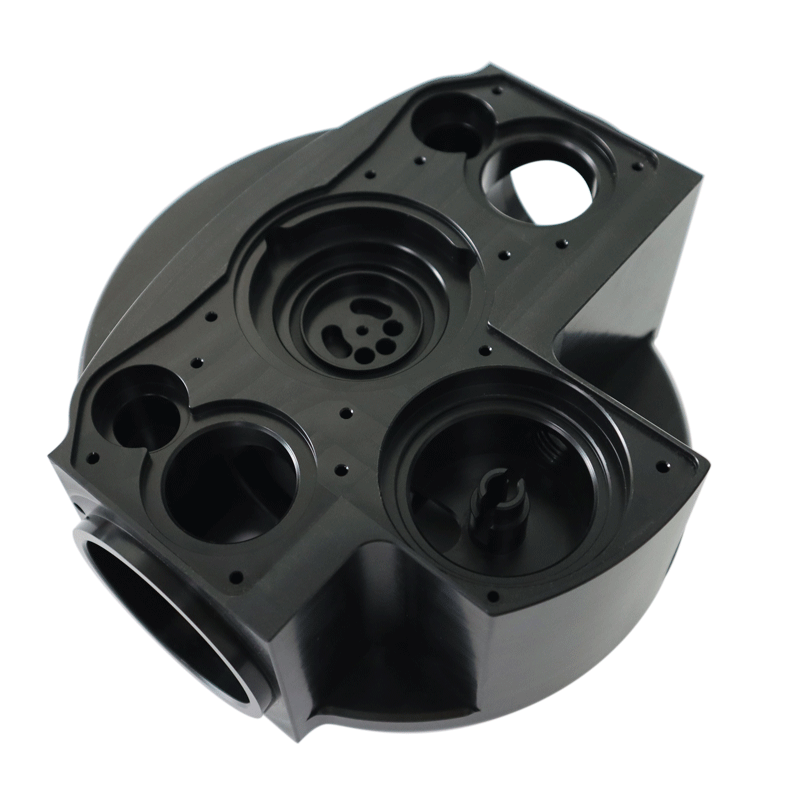
Key features: Excellent for precision mechanical parts - high stiffness, low friction coefficient, and very good machinability, with superior dimensional stability compared to nylon.
Typical data: Density ~1.41-1.42 g/cm³. Tensile strength ~60-70 MPa.
Applications: Precision gears, sliding bushings, bearings, valve components in equipment.
Processing considerations: Easy to machine; but ensure good fixturing to avoid chatter; water absorption is low, so dimensional stability is strong.
Marketing angle: "We machine POM/Acetal parts with tight tolerances for sliding, wear-resistant components" resonates with automation/packaging/food‐equipment buyers.
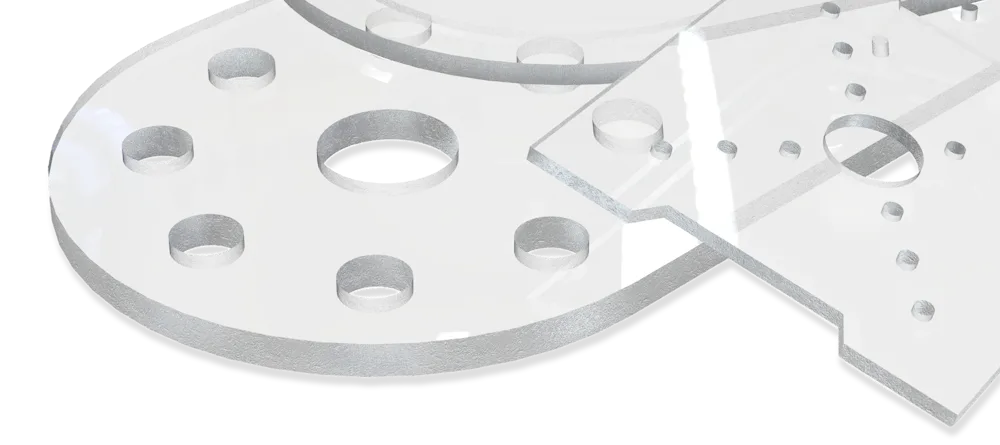
Key features: Transparent (in many grades), high impact strength, good mechanical properties. For example, PC tensile strength ~55-75 MPa. 维基百科+1
Applications: Transparent protective covers, display windows, medical device housings, lighting components.
Processing considerations: Because PC is more impact-resistant but less rigid than e.g. POM, it may require slower feed rates to avoid melting or surface distortion; good cooling is essential.
Marketing angle: Emphasising "transparent/impact-resistant plastic machining" opens up electronics, lighting, optical cover markets.
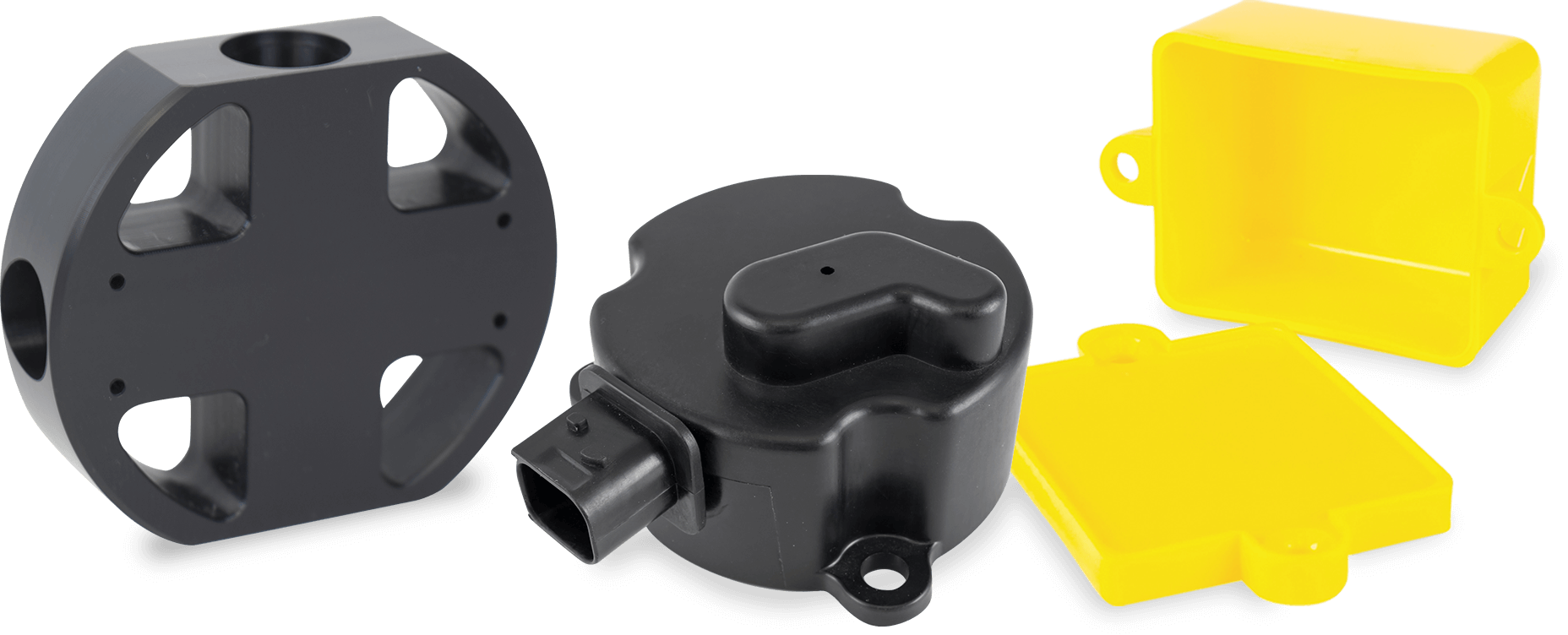
Key features: Essentially the same family as POM, widely known by the trade name Delrin.
Applications: Similar to POM – sliding parts, mechanical components, cost‐effective structure plastic.
Processing considerations: Because widely known and familiar to OEM buyers, listing "Delrin parts" on your site helps SEO and buyer recognition.
Marketing angle: "Delrin (POM) parts rapidly produced from drawing" – good for small-batch, cost‐sensitive customers.
Nylon (Polyamide, PA series)

Key features: Good toughness, wear resistance, fatigue resistance. However, absorbs moisture more than POM, which can affect dimensional stability.
Applications: Automotive interior parts, sliding bearings, under-hood components, vibration-damping parts.
Processing considerations: Because moisture absorption can lead to expansion, pre‐drying may be required; dimensional tolerance needs tighter control.
Marketing angle: Useful material for slightly lower cost but still high performance – good for OEMs who want "plastic instead of metal" solutions.

Key features: Cost-effective thermoplastic, easy to machine, good impact resistance. Often used for prototyping or non-critical parts. polypvc.com
Applications: Functional prototypes, electronic housings, low‐load mechanical parts.
Processing considerations: Because it's lower performance, not ideal where tight tolerance, high wear or high temperature are required. Good for "entry-level" plastic parts.
Marketing angle: For overseas clients doing prototypes or low cost parts, saying "ABS machining from drawing" gives a budget-friendly option.

Key features: Excellent chemical resistance, low friction, lightweight, relatively low cost.
Applications: Food-processing machine parts, chemical-resistant components, low-load sliding surfaces.
Processing considerations: Because HDPE is softer, chip control can be trickier; standalone stiffness is lower-less suited for high‐load structural parts.
Marketing angle: Market to clients in chemical, food or liquid-handling industries who need corrosion-resistance more than high strength.

Key features: Excellent optical clarity, good surface finish, high gloss.
Applications: Transparent windows, light covers, signage, decorative parts.
Processing considerations: Brittle compared to other engineering plastics; post-finishing (polishing) may be required for optics.
Marketing angle: Use for "clear/optical plastic parts" in electronics, displays, lighting-highlighting "optical quality machining" is a differentiator.

Key features: Extremely low friction, high temperature resistance, outstanding chemical inertness.
Applications: Seals, slide bearings, chemical/acid resistant parts, high-temperature environments.
Processing considerations: Very challenging to machine (tool wear, burrs, chip control), so costs are higher; often only justified for high‐end specialist parts.
Marketing angle: For buyers in chemical, aerospace or high-end equipment markets, offering PTFE machining shows your factory covers the full spectrum-even specialist plastics.
Material Properties at a Glance
| Material | ensile Strength* | Heat Resistance | Key Advantages | Typical Applications |
| PEEK | ~90-100 MPa 维基百科+1 | Up to ~250-260 °C continuous | Superb strength/chemical/thermal | Aerospace, medical, oil & gas |
| PEI | High | ~170-200 °C+ | Good strength + humidity resistance | Medical, electronics |
| POM / Acetal | ~60-70 MPa | ~90-100 °C distortion temperature | Excellent machinability + stability | Gears, sliding parts |
| PC | ~55-75 MPa 维基百科+1 | ~120-140 °C | Transparent, high impact | Covers, displays |
| Nylon (PA) | ~45-80 MPa (moisture dependent) | ~100-120 °C | Tough, wear resistant | Bearings, automotive |
| ABS | Moderate | ~80-100 °C | Low cost, easy machining | Prototypes, housings |
| HDPE / PE | Lower | Moderate | Chemical resistance, low cost | Food/chemical equipment |
| PMMA | Lower | ~80-90 °C | Clarity, surface finish | Displays, signage |
| PTFE | Variable | Up to ~260-300 °C | Very low friction + chemical | Seals, high-end parts |
Note: Tensile strength values are indicative and depend on grade, fill, reinforcement.
Why These Materials Are Especially Relevant in 2025
Light-weighting: Many OEMs and end-users now demand lighter components to reduce overall equipment weight, energy consumption or cost. Plastics provide a major advantage versus metals.
Hybrid manufacturing: Factories that can machine both metal and plastic parts gain more versatility and can offer "one-stop" services for complex assemblies (e.g., metal frame + plastic cover + plastic sliding part).
Small batch & rapid turnaround: With the rise of automation and customised equipment, many orders are small batches. Machining engineering plastics is faster and more cost-effective for low-volume runs than injection-moulding, especially when drawing-based.
Advanced plastics: Materials like PEEK, PEI, PTFE are becoming more accessible, and industries are upgrading their specs (e.g., higher heat, higher chemical resistance) – so offering these shows you're keeping up with market demands.
SEO & keyword advantage: By offering "engineering plastic CNC machining", you open up additional keyword categories beyond "metal CNC machining". Buyers searching for "CNC plastic parts China" or "engineering plastic machined components" will find you.
Sustainability / composite trends: Plastics that replace metals (or reduce weight) are increasingly demanded for eco-friendly equipment, so marketing plastic machining aligns with these strategic trends.
Common Questions (FAQ)
Q1: What plastic grades do you machine?
A: We machine a wide range of engineering plastics including PEEK, PEI, POM/Acetal (Delrin), PC, Nylon, ABS, HDPE/PE, PMMA, PTFE - from customers' drawings, with turning, milling, drilling, grinding and secondary processing.
Q2: What tolerances are achievable on plastic CNC parts?
A: Tolerances depend on material and geometry; for many plastics (e.g., POM) tolerances of ±0.05 mm or better are achievable in small to medium batches when properly machined, fixtured and measured. (Always review drawing and application environment.)
Q3: What lead-time can you offer for plastic parts?
A: For standard plastic parts (e.g., POM, PC) in moderate volume (100-500 pcs) we can typically offer 10-15 working days after drawing confirmation and PO. Higher performance plastics (e.g., PEEK) require longer due to tooling/setup, so lead-time may extend to 20-30 days.
Q4: Do you offer surface finishing for plastic parts?
A: Yes - we provide standard finishing such as polishing, engraving, painting, anodising (for metal parts) and bonding if required. For transparent plastics like PC or PMMA we can deliver optical finish as per client drawing.
Q5: What file formats do you accept and what is your export capability?
A: Please provide drawings in formats such as STEP, IGES, DWG, or PDF with dimensions. We support overseas logistics via DHL/FedEx, container freight, and handle export documentation (CE mark, RoHS if required) to your destination port.
Final Words & Call to Action
As the global manufacturing market evolves, engineering-plastic CNC machining is no longer just a niche; it is a strategic growth direction. By offering a full spectrum of materials-from cost-effective ABS or POM through to premium PEEK and PTFE-you broaden your market reach and respond to increasingly sophisticated buyer demands.
For overseas OEMs seeking a reliable China-based factory with both metal and plastic precision machining capabilities: Shenzhen Dahong Precision Machinery Co., Ltd stands ready. We handle from drawing to finished part, manage procurement of raw material, setup CNC lathes, milling machines, wire-cut and grinding, perform full-process QC, and pack/export to your destination. With more than 9 years of export experience, we serve customers in automation, packaging, automotive, medical devices and more.


