

When designing and manufacturing custom mechanical parts for machinery, automation, or industrial equipment, CNC machining meets the production requirements of non‑standard equipment, automated machinery, and custom‑built devices in terms of part accuracy, consistency, fit, and stability.
CNC machining is one of the most commonly used manufacturing processes for modern mechanical parts.
Understanding how CNC machining works, its process types, materials, accuracy, surface finishes, and how to select a CNC machining supplier can help reduce manufacturing costs while minimising quality and delivery issues during production.
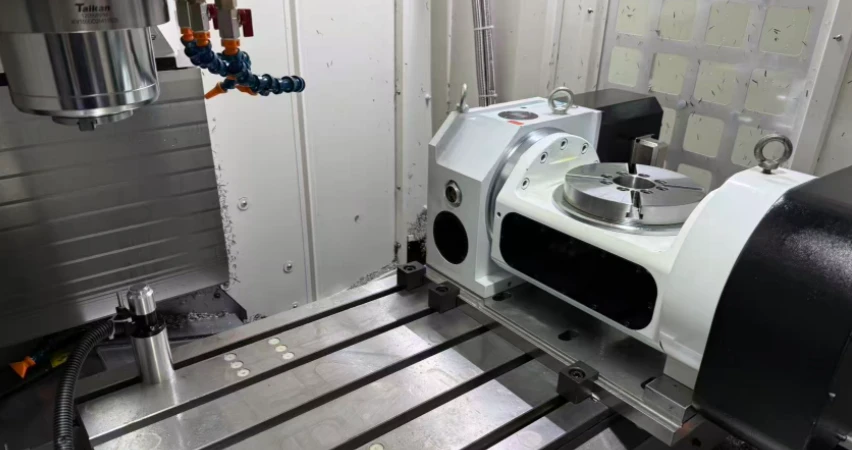
What Is CNC Machining?
CNC machining is a subtractive manufacturing process in which computer programs control the movements of machine tools. Based on 2D/3D engineering drawings, it performs milling, turning, drilling, tapping, grooving, and other operations on metals and engineering plastics to ultimately produce precision mechanical parts that meet dimensional, tolerance, and structural requirements.
Simplified workflow:
CAD drawing (STEP, STP, or IGES format) → CAM programming → CNC machine (milling/turning) → cutting → inspection → finished part.
The entire manufacturing process is digitally controlled, eliminating errors associated with manual operations. Whether for single prototype samples, small‑batch trials, or large‑scale production, it ensures uniform part dimensions, stable machining accuracy, and higher yield rates.
CNC machining is mainly divided into:ainly divided into:

What Is CNC Milling?
In CNC milling, the workpiece is fixed on the worktable, and rotating cutting tools remove excess material from the workpiece.
Different numbers of axes allow machining of different part features:
3‑axis / 4‑axis: steps, flat surfaces, holes, curved surfaces, threads, slots, chamfers.
5‑axis: cavities, complex contours, tight‑tolerance parts from multiple angles, and full‑surface machining.
Therefore, CNC milling is well suited for manufacturing the following in automation equipment:
Mounting plates
Support bases
Connectors
Robotic arm components
Fixtures
Equipment enclosures
Precision structural parts
What Is CNC Turning?
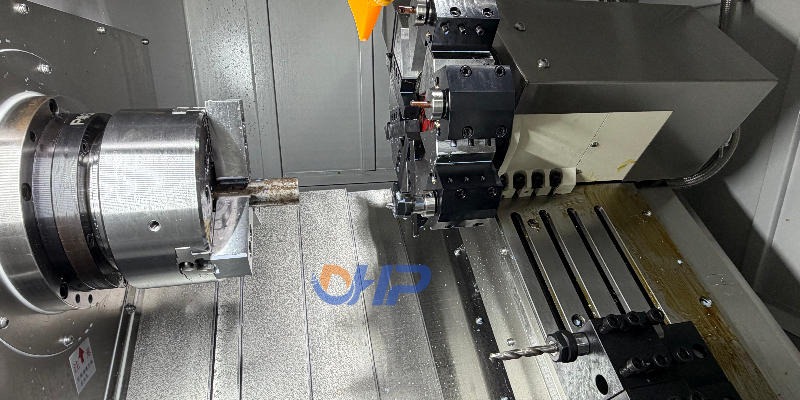
CNC turning is mainly used for rotational parts, such as round bar stock.
The raw bar stock rotates at high speed, while the cutting tool moves along the surface of the workpiece to cut it into the required shape.
For such parts, CNC turning is generally more efficient and cost‑effective.
Therefore, CNC turning is ideal for cylindrical, round, or axis‑symmetric components:
Shafts
Pins
Bushings
Flanges
Connecting shafts
Threaded rods
Washersour casey
What Materials Are Used for CNC Machined Parts?
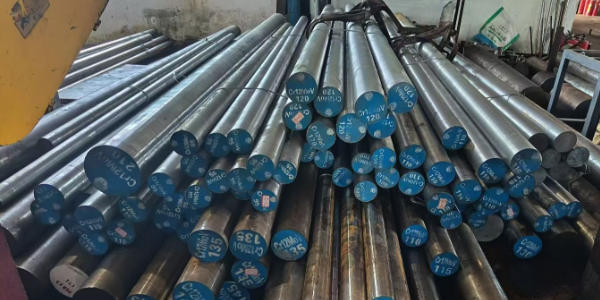
Our facility supports precision CNC machining of all categories of metals and engineering plastics, covering common materials for industrial machinery and automation components. Material selection can be precisely tailored to the customer's operating conditions, wear resistance, corrosion protection, lightweight requirements, insulation needs, and cost targets, accommodating various non‑standard custom parts.
Metals
Aluminium alloys
Stainless steel
Carbon steel
Alloy steel
Tool steel
Bearing steel
Titanium alloys
Brass
Copper
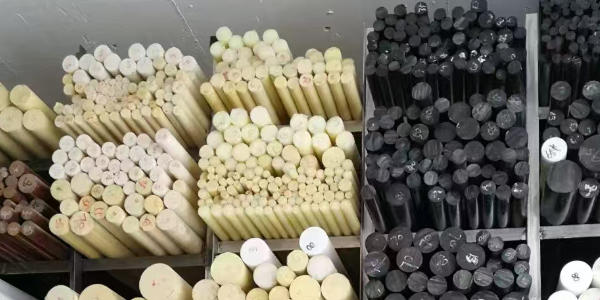
Engineering plastics
POM
PEEK
PA6
PA66
PTFE
PEI
PE
PC
ABS
What Are the Accuracy and Tolerance Requirements for Custom CNC Machining?
For automation and machinery manufacturers, custom CNC machining offers greater flexibility in part design and precision control.
The accuracy requirements for custom CNC machining are typically defined by the 2D/3D engineering drawings, taking into account the material, part geometry, machining process, and drawing specifications.
Tight tolerances:
For general mechanical parts, extremely tight tolerances are not always necessary; some precision parts, however, require tighter tolerances than standard CNC machining.
Custom CNC machined parts, achieved through CNC milling and turning, can reach tolerances of ±0.01 mm and ±0.005 mm.
Beyond linear and diameter tolerances, some mechanical parts also require control of geometric tolerances:
Flatness
Parallelism
Perpendicularity
Concentricity
Runout
Surface Roughness:
Surface roughness is another important technical requirement for precision CNC parts.
Engineering drawings typically use Ra to denote surface roughness.
Examples:
Ra 3.2 μm
Ra 1.6 μm
Ra 0.8 μm
Ra 0.4 μm
Different parts have different surface roughness requirements.
Grinding → Lapping → Polishing
These subsequent precision processes rely not only on CNC milling or turning; it is particularly important to have a well‑equipped facility (CNC milling, CNC turning, grinding machines, wire EDM, etc.) to support integrated machining, thereby realising a true one‑stop custom machining service.
What Surface Finishing Options Are Available for Custom CNC Machined Parts?
Surface finishing addresses: aesthetics, corrosion protection, and functional performance (wear resistance / hardness).
Mechanical finishing (appearance and feel):
As‑machined
Sandblasting
Brushing
Polishing
Anodising (preferred for aluminium parts)
Standard anodising
Hard anodising
Available in various colours as required (natural, red, blue, black, etc.).
Plating (Electroplating / Electroless Plating)
Zinc plating
Electroless nickel plating
Hard chrome plating
DLC
PVD
Titanium nitride
Chromium nitride
Chemical finishing (thin protective layers):
Passivation
Black oxide
Phosphating
Part Marking & Engraving
LOGO
permanent marking of logos
serial numbers, and specifications for traceability.
It is recommended to provide
Complete 2D/3D information enables faster and more accurate evaluation of machining processes, material costs, and production lead times.
2D Engineering Drawing
Surface Finish
3D CAD Model
Heat Treatment
Material
Marking Requirements
Quantity
Inspection Requirements
Tolerance Requirements
Required Delivery Schedule
Summary
CNC machining is an important custom part manufacturing method in modern mechanical manufacturing.
For automation equipment manufacturers, machinery OEMs, robotics companies, packaging machinery manufacturers, and semiconductor equipment companies, CNC machining can produce high‑precision, complex‑structure, and non‑standard mechanical parts according to specific engineering drawings.
If you have non‑standard custom mechanical parts or require machining from drawings, feel free to send your drawings. We will provide free process optimisation, accurate quotations, and customised machining solutions.

Custom Component Machining Center
Custom CNC precision machining for metal components. Multi-axis & wire EDM, no MOQ.


