

What is Stainless Steel?
Stainless steel is an alloy steel with excellent corrosion resistance and aesthetic appeal. Its core characteristic is corrosion resistance, which is mainly attributed to the presence of at least 10.5% chromium. It has good toughness and can maintain excellent mechanical properties and oxidation resistance at high temperatures. According to the differences in composition and properties, stainless steel is mainly classified into several categories, such as austenitic, ferritic, martensitic and duplex stainless steel.

Stainless Steel CNC Machining Services
Stainless steel, due to its corrosion resistance, high strength, hygiene and processability, has become an important material in industries such as high-precision hardware components, automation equipment, medical devices, automotive parts, semiconductors and food packaging. As a manufacturer specializing in high-precision hardware components, precision automation and mechanical processing, we have a deep understanding of the special requirements for stainless steel materials in different industries.
Contact us now and set off on our new project!

About Materials
Stainless steel's high tensile strength enables it to stand the test of time in industrial environments, and it also exhibits good fatigue resistance under cyclic loads. The various outstanding properties of stainless steel can easily meet the requirements of specific projects, making it one of the most popular materials for precision machinery.
● Corrosion resistance - Inherently resistant to corrosion, suitable for use in damp, high-temperature or chemical environments, ensuring your parts do not rust or get damaged
● Hygiene - The surface of stainless steel is smooth, making it less prone to bacterial and dirt accumulation, and easy to clean and disinfect
● Machinability - Easy to cut, weld and form, suitable for the processing requirements of various complex hardware parts
● Multi-functional mechanical properties - Whether it's high-load mechanical parts or precision components, our stainless steel materials can provide outstanding strength and stability
● Durability - Our stainless steel materials are strictly selected and have excellent durability, maintaining a long service life even in harsh environments
● Aesthetics - The surface of stainless steel can be treated with polishing, brushing, coloring, etc., to achieve high gloss or special texture effects
● Environmental friendliness - Stainless steel can be 100% recycled and reused, reducing resource waste and environmental pollution
Classification of Stainless Steel Materials
In mechanical design, we often use austenitic stainless steel and martensitic stainless steel because they have excellent physical and mechanical properties.
Austenitic stainless steel: It contains a relatively high amount of nickel (Ni) and chromium (Cr), is usually non-magnetic, and has excellent corrosion resistance, toughness and formability. It has good welding performance and is the most widely used.
| Material | Preponderance | Application Area |
| 303 | Excellent cutting performance, suitable for mass production, good surface finish | Shaft, pin, bushing |
| Food machinery parts | ||
| Conveying equipment component | ||
| Medical equipment accessories | ||
| Pump valve parts Pipe fittings | ||
| 304 | Strong versatility, low cost | Food equipment, environmental protection equipment |
| 304L | Low carbon design and excellent weldability | Chemical equipment, food processing equipment, medical equipment and welding structures. |
| 316 | Molybdenum (Mo) is added to improve corrosion resistance, especially in chloride environments | Marine environment, chemical equipment |
| 316L | Low carbon version, reduce carbide precipitation, improve intergranular corrosion resistance | Production equipment, surgical instruments, automotive exhaust system parts, engine parts |
| 321 | Titanium (Ti) is added to stabilize carbides and improve intergranular corrosion resistance | High-temperature components: heat exchangers, boiler pipes Chemical equipment: pickling equipment, nitric acid storage tanks Welded structures: Welded parts that require stabilization treatment |
| 347 | Niobium (Nb) and tantalum (Ta) are added to stabilize carbides and improve intergranular corrosion resistance | High-temperature equipment: boiler pipes, gas turbine components, heat exchangers Chemical equipment: Strong oxidizing acid environment |
Martensitic stainless steel: It contains a relatively high amount of carbon (C) and chromium (Cr), is magnetic, and can achieve high hardness and strength through heat treatment. However, it has relatively low toughness and average corrosion resistance, making it suitable for applications that require high strength and wear resistance.
| Material | Preponderance | Application Area |
| 410 | Universal type, good strength, hardness and wear resistance, low corrosion resistance | Tools, bearings, valves, pump parts, mechanical parts |
| 420 | Higher carbon content provides higher hardness and wear resistance | Surgical instruments, knives, scissors, bearings, molds |
| 420F | Improved version of 420, adding sulfur (S) to improve machining performance, hardness and wear resistance comparable to 420 | High precision mechanical parts, cutting tools |
| 440A | High carbon and high chromium martensitic stainless steel with excellent hardness and wear resistance | Tools, bearings, surgical instruments, molds |
| 440C | Highest carbon content, best hardness and wear resistance | High precision tools, bearings, molds, surgical instruments |
| 431 | High chromium content, better corrosion resistance than 410 and 420 series | High strength mechanical parts, shafts, pump parts |
| 630 | Precipitation-hardened martensitic stainless steel with high strength and corrosion resistance | Aerospace components, chemical equipment |
| 440F | Improved version of the 440C with added sulfur (S) to improve machining performance | High precision mechanical parts, cutting tools |
Mechanical Property Diagram of Stainless Steel
Learning more about the mechanical properties of stainless steel can help you choose materials for your project
| Stainless steel type | Material | Performance in Annealed State | Quenched and Tempered State | Performance in Annealed State | Quenched and Tempered State | Performance in Annealed State | Quenched and Tempered State | Performance in Annealed State | Quenched and Tempered State |
| Strength of extension (MPa) | Yield Strength (MPa) | Ductility (%) | Hardness (HB) | ||||||
| Austenitic Stainless Steel | 304 (1.4301) | 520-750 | - | 205-310 | - | 40-60% | - | Brinell hardness (HB):150-200 | - |
| 316 (1.4401) | 520-690 | - | 205-310 | - | 40-50 | - | Brinell hardness (HB):150-200 | - | |
| 321(1.4541) | 520-620 | - | 205-310 | - | 40-50 | - | Brinell hardness (HB):150-200 | - | |
| 347(1.4550) | 520-690 | - | 205-310 | - | 40-50 | - | Brinell hardness (HB:150-200 | - | |
| Martensitic Stainless Steel | 410 (1.4006) | 480-600 | 850-1000 | 275-350 | 700-850 | 20-25% | 12-18% | Brinell hardness (HB):170-200 | Rockwell Hardness (HRC):35-45 |
| 440C (1.4125) | 600-800 | 1900-2300 | 350-450 | 1700-2100 | 15-20% | 2-5% | Brinell hardness (HB):200-250 | Rockwell Hardness (HRC):58-62 | |
| 431(1.4057) | 700-900 | 1000-1350 | 500-650 | 800-1100 | 15-20% | 8-12% | Brinell hardness (HB):220-260 | Rockwell Hardness (HRC):35-50 | |
| 630(1.4542) | 1000-1100 | 1170-1450 | 800-900 | 1170-1310 | 15-20% | 10-12% | Brinell hardness (HB):28-32 | Rockwell Hardness (HRC):40-45 | |
Surface Treatment Services For Stainless Steel Parts Processed By CNC
Dahong Precision - Processing can provide perfect surface treatment services for your cnc machined stainless steel parts, including polishing, passivation, PVD, sandblasting, coating and electroplating options.
Each service has its own advantages. You can choose one that meets the requirements of your project!


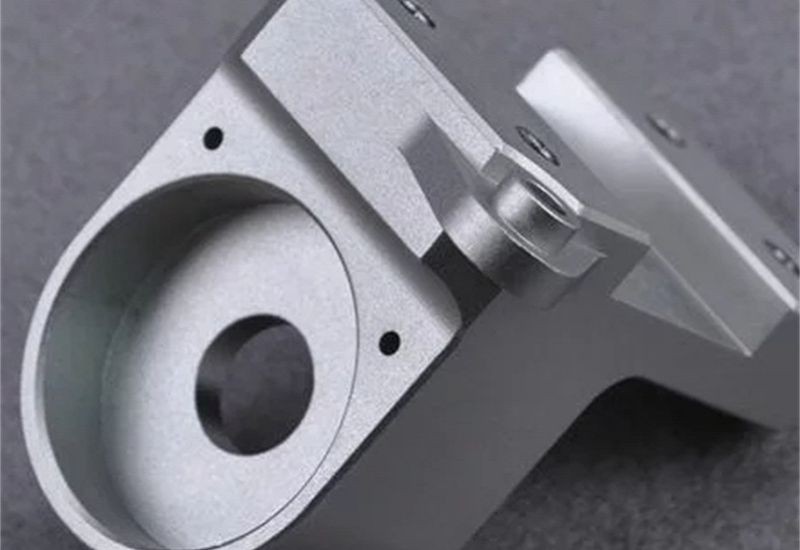
Sandblasting cleans the surface of parts through high-speed abrasive impact, removes oxide layers and burrs, increases roughness to enhance the adhesion of the coating, evenly treats the surface, improves fatigue resistance, has wide applicability, and can strengthen the surface performance of stainless steel.

Electroplating deposits a metal layer on the surface of parts through electrolysis, enhancing their corrosion resistance, wear resistance, electrical conductivity and decorative properties. For instance, nickel plating and PVD surface treatment services have a wide range of applications.

Why Choose Dahong Precision For Custom CNC Machining?

Production on demand
Our production workshop processing services support you from 1 piece to over 1,000 pieces, whether it's small-batch production or large-scale production

Quality Guarantee
As a processing factory specializing in non-standard custom parts for many years, we provide our customers with material certification and inspection reports.

Save your costs
Our one-stop mechanical custom parts workshop features efficient production capacity and cost control.

Material Selection
A selection of over 50 metals and engineering-grade plastics, including PEEK, ABS, PTFE, aluminum, copper, stainless steel and other materials. It is applicable to the application of various mechanical equipment parts.

High precision tolerance
The processing services provided have a tolerance range from +/-0.002MM to 0.005MM, depending on your part specification requirements.

Accelerated delivery
Our processing factory is located in Shenzhen, which enjoys convenient transportation and is close to major shipping ports, ensuring seamless transportation and peace of mind.
About Stainless SteelFAQ

How is the corrosion resistance of stainless steel, especially in specific environments?
Does stainless steel need regular maintenance? Is the maintenance cost high?
What is the welding performance of stainless steel?
Is stainless steel suitable for manufacturing medical devices?
Which components are stainless steel typically used in automotive manufacturing?
Other Materials


PEEK
High temperature resistance, self-lubrication, stable insulation, chemical resistance

DaHong Machining
Contact us today to learn more about Stainless Steel Materials precision parts processing!