

About Steel Materials
Steel, as a common engineering material, is mainly an alloy composed of iron and carbon. The carbon content in steel ranges from 0.02% to 2.11%. It also contains a small amount of trace elements at the same time: iron, manganese, nickel, vanadium, etc. The higher the carbon content of steel is, the harder and stronger the metal is. Steel is currently one of the most widely used materials in the world.
The hardness range of steel is very wide, and the hardness of different types of steel also varies. Proper heat treatment is very important for improving properties such as hardness and toughness.

Steel CNC Machining Services
Steel has become one of the commonly used materials in CNC machining due to its high strength, good toughness and wide application range. When CNC machining steel, various processing methods can be adopted, including milling, turning, drilling and tapping, etc. These processing methods can precisely manufacture complex parts and components in accordance with the requirements of the design drawings.
With 9 years of mechanical processing experience and advanced one-stop processing machinery and equipment, whether it is a single sample or mass production, we can customize steel parts according to your requirements and drawings.
Contact us now and set off on our new project!

About The Material
Steel is an alloy of iron and carbon and is one of the most widely used metallic materials in modern industry. The reason why it can occupy an important position in many fields mainly depends on its series of unique characteristics.
● High strength and high hardness
● Good toughness and ductility
● Good solderability
● Easy to process and form
● Heat treatability
● Economy
Classification of Steel Materials For CNC Machining
4140 steel is an ultra-high strength steel, it is also known as "SCM440" steel.
It has high strength, excellent toughness and wear resistance, and good luster after grinding.
Hardenability is also good, no obvious tempering brittleness, high fatigue limit and resistance to multiple shocks after tempering treatment, low temperature impact toughness is good. Good cutting performance after heat treatment.
Application field:
● Automotive industry: crankshafts, gears, axles, suspension components, etc.
● Oil and gas: drill collars, tool joints, valves, etc.
● Mechanical manufacturing: shafts, spindles, couplings, etc.
● Tool manufacturing: molds, fixtures, etc.
SAE 4342 is a medium carbon alloy structural steel material.
SAE 4342 steel contains the elements nickel, molybdenum and chromium (Ni-Cr-Mo), which increase the hardenability and strength of the steel.
Due to the material characteristics of high tensile strength and high hardness, and has good machining performance.
Advantages: Ultra-high strength and toughness combined | Excellent fatigue resistance | Suitable for deep quenching of large parts
Limitations: The welding process is complex and requires strict preheating│ Poor corrosion resistance and surface protection are necessary│The cost is higher than that of ordinary alloy steel (due to nickel content)
Application field:
● Aerospace: aircraft landing gear, engine crankshafts, helicopter rotor shafts.
● Automotive industry: High-performance racing car drive shafts, differential gears, clutch parts.
● Energy equipment: oil drill pipes, turbine shafts.
1.0402 is a carbon structural steel that has a wide range of applications in industry, typically used in mechanical manufacturing and engineering applications. It has appropriate hardenability, high yield strength, tensile strength and fatigue strength, as well as sufficient plasticity and toughness. Meanwhile, it is corrosion-resistant, heat-resistant and wear-resistant.
It has good welding performance, medium cutting performance and is suitable for conventional mechanical processing.
The application fields of 1.0402 steel are very extensive, including automotive parts, petrochemicals, ships, machinery, electronics, and other industries.
4340 alloy structural steel features high strength, toughness, excellent hardenability and overheat stability.
It is mainly used for manufacturing important parts with high strength and good plasticity, such as shafts, gears, fasteners, etc. In addition, after nitriding, it can be used to manufacture important parts with special functional requirements.
It also has excellent fatigue strength and is suitable for parts that bear cyclic loads and complex shapes.
S275JR is a common carbon structural steel plate.
S275JR is a carbon structural steel and low alloy structural steel for engineering and structural steel, with high strength, good plasticity and machinability, due to fewer alloying elements, low carbon equivalent, good weldability.
Small parts can be quenched and strengthened, and are mostly used in the manufacture of parts requiring higher strength, such as gears, shafts, sprockets, keys, bolts, nuts, agricultural machinery steel, conveyor chains and chain links in mechanical manufacturing parts.
Mild steel (soft steel) is carbon steel with a carbon content of less than 0.25%, so it belongs to low-carbon steel. Because of its low strength, low hardness and softness, it is also called soft steel. It has good weldability and excellent bending and rolling processing performance. The price is relatively low, economical and practical.
It has poor corrosion resistance and is prone to rust. Surface treatment (such as painting or galvanizing) is required to enhance its corrosion resistance.
Mild steel encompasses the majority of common carbon structural steels and a portion of high-quality carbon structural steels. Most of them are used for engineering structural components without heat treatment, while some are carburized and undergo other heat treatments for mechanical parts that require relatively high wear resistance. For example, car bodies, chassis, manufacturing mechanical parts, etc.
1.6565: Also known as "En24t" steel, it is an alloy structural steel featuring high strength, toughness and excellent hardenability.
Steel 1.6565 is a combination of nickel, chromium and molybdenum, featuring excellent ductility and water resistance, and can be used well even at high temperatures. It is a nickel-chromium-molybdenum combination, which provides high-strength steel with good ductility and wear resistance.
It is suitable for manufacturing mechanical parts under high load and high temperature conditions, such as aircraft, ships, automobiles, etc.
H13 tool steel is a kind of hot work die steel. Corresponding to SKD61 material.
The chemical composition of H13 tool steel is mainly composed of elements such as carbon (C), manganese (Mn), silicon (Si), chromium (Cr), molybdenum (Mo), nickel (Ni), and vanadium (V). It features high strength, high toughness and strong wear resistance, and can meet the usage requirements in harsh environments such as high temperature, high pressure, high strength and high wear.
H13 tool steel is often used in high-performance components in the zero-domain of the aviation industry, such as engine parts. Molds for components in the automotive manufacturing industry, various precision parts in the electronics industry, etc. It also has good polishing properties and is suitable for components with high surface quality.
SAE-AISI1050 is a high-quality high-carbon steel, also known as S50C steel or JISS50C steel.
It features high strength and hardness, is suitable for withstanding high loads and wear environments, has excellent heat treatment performance, can adjust mechanical properties through heat treatment, has a relatively low cost, and is easy to machine and form during processing.
AISI1050 steel plates can offer better load-bearing capacity and seismic performance, enhancing the safety and stability of buildings.
The application scope of AISI1050 is very wide:
● High-strength parts: gears, shafts, bolts, pins, etc
● Wear-resistant parts: cutting tools, molds, springs, etc
● Others: Agricultural machinery parts, tools, mechanical structural components, etc.
Mechanical Property Diagram Of Steel
Learning more about the mechanical properties of steel can help you choose materials for your project
| Name of the material | Strength of extension | Yield strength | Ductility | Hardnessl | Impact toughness (Charpy V-notch) |
| 5140 | 850 MPa -1000 MPa | 650 MPa - 800 MPa | 12% - 15% | 200 - 250 HB((Unheat-treated state) It can reach 50-55 HRC after heat treatment | Good and suitable for withstanding dynamic loads |
| AISI 1045 | 570mpa-700mpa | 310mpa - 450mpa | 12% - 20% | 170 - 210 HB(Brinell Hardness) | Medium, suitable for dynamic loads |
| 4140 | 950 MPa - 1000 MPa(After heat treatment) | 850 MPa - 900 MPa(After heat treatment) | 12% - 15% | 197-223 HB (Annealed state) It can reach 55 HRC after heat treatment | High, suitable for withstanding impact and dynamic loads |
| SAE 4342 | 1000 MPa - 1200 MPa | 850 MPa - 1000 MPa | 10% - 15% | 35-50 HRC (depending on tempering temperature) | 40 J - 60 J (Room temperature) |
| 1.6565 | 1000 MPa - 1200 MPa | 850 MPa - 1000 MPa | 10% - 15% | 35-50 HRC (Depending on tempering temperature) | 40 J - 60 J (Room temperature) |
| Mild steel | 370-500 MPa | 235 MPa | It has good ductility and toughness, and is easy to process and shape. | The Brinell hardness (HB) is approximately 120-180 | It has good impact toughness at room temperature |
| 1.0402 | 420 - 540 MPa | ≥ 240 MPa | ≥ 23% (depending on the sample size and test conditions) | It is usually within the range of 130-170 HB | |
| H13 tool steel | 1500 - 2000 MPa(After heat treatment) | 1200 - 1600 MPa(After heat treatment) | 10% - 15%(After heat treatment) | Annealed state: approximately 180-220 HB | Good and suitable for withstanding impact loads |
| After heat treatment: It can reach 45-55 HRC (depending on the heat treatment process) | |||||
| 4340 | Annealed state: approximately 700-900 MPa | Annealed state: approximately 500-700 MPa | 12% - 20% (after heat treatment) | Annealed state: approximately 200-250 HB | Excellent and suitable for withstanding impact loads |
| After heat treatment: It can reach 1000-1500 MPa | After heat treatment: It can reach 800-1200 MPa | After heat treatment: It can reach 35-55 HRC | |||
| S275JR | 410~560 MPa | Thickness ≤ 16mm: 275 MPa | Thickness ≤ 40mm: ≥22% | - | ≥27 J (tested at room temperature of 20℃) |
| 16 mm < thickness ≤40 mm: 265 MPa | Thickness > 40mm: ≥20% | ||||
| 40 mm < thickness ≤63 mm: 255 MPa | |||||
| 63mm < thickness ≤ 80mm: 245 MPa | |||||
| (Note: Yield strength decreases with the increase of thickness) | |||||
| SAE-AISI 1050 | 620 MPa (Before heat treatment) | 350 MPa (Before heat treatment) | 15% (Before heat treatment) | 180 HB (Before heat treatment) | |
| 850-1000 MPa (After heat treatment) | 700-850 MPa (After heat treatment) | 10% to 12% (After heat treatment) | 250-300 HB (After heat treatment) |
Surface Treatment Of Steel Parts Processed By CNC
Dahong Precision - Processing can provide perfect surface treatment services for your cnc machined steel parts, including polishing, passivation, sandblasting, powder coating and electroplating options.
Every kind of organization has its own advantages, so it is essential to choose one that can meet all your requirements!

Polishing makes the surface smooth and beautiful, enhances the wear resistance and corrosion resistance of parts, reduces the coefficient of friction, and is suitable for various materials such as metals and plastics.

Passivation can enhance the corrosion resistance of parts, reduce oxidation, prevent rusting of metal surfaces, and is suitable for easily corroded materials such as stainless steel, thereby extending the service life of parts.
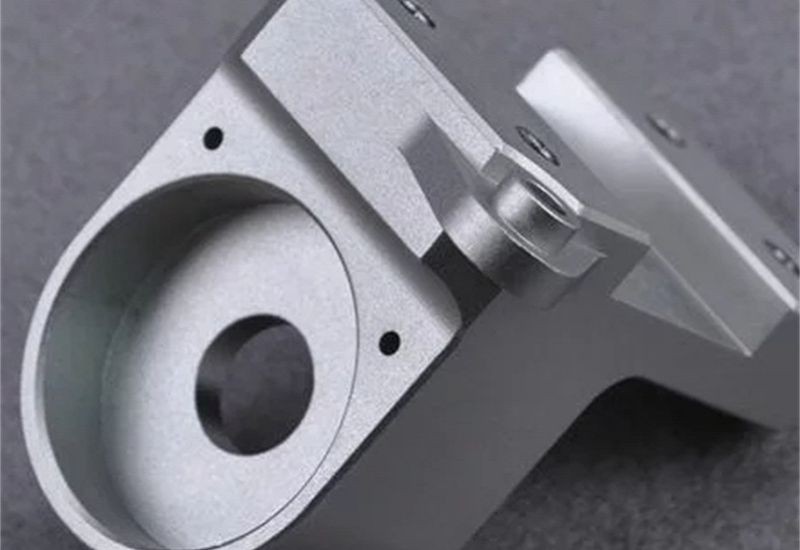
Sandblasting cleans the surface of parts through high-speed abrasive impact, removes oxide layers and burrs, increases roughness to enhance the adhesion of the coating, evenly treats the surface, improves fatigue resistance, has wide applicability, and can strengthen the surface performance of metals.

Electroplating deposits a metal layer on the surface of parts through electrolysis, enhancing their corrosion resistance, wear resistance, electrical conductivity and decorative properties. It has a wide range of applications.

Wire drawing is a process that forms a uniform linear texture on the surface of parts through mechanical friction. It features scratch resistance, wear resistance, enhanced texture, concealment of fine scratches, and improved anti-fingerprint effect. It is commonly used for surface treatment of metals such as steel and aluminum.
Why Choose Dahong Precision For Custom CNC Machining

Production on demand
Our production workshop processing services support you from 1 piece to over 1,000 pieces, whether it's small-batch production or large-scale production

Quality Guarantee
As a processing factory specializing in non-standard custom parts for many years, we provide our customers with material certification and inspection reports.

Save your costs
Our one-stop mechanical custom parts workshop features efficient production capacity and cost control.

Material Selection
A selection of over 50 metals and engineering-grade plastics, including PEEK, ABS, PTFE, aluminum, copper, stainless steel and other materials. It is applicable to the application of various mechanical equipment parts.

High precision tolerance
The processing services provided have a tolerance range from +/-0.002MM to 0.005MM, depending on your part specification requirements.

Accelerated delivery
Our processing factory is located in Shenzhen, which enjoys convenient transportation and is close to major shipping ports, ensuring seamless transportation and peace of mind.
About Steel FAQ

How to increase the surface hardness of steel materials?
What are the welding performance, forming performance and mechanical processing performance of steel?
How is the lightweight performance of steel?
What are the wear resistance and fatigue strength of steel?
How clean is the steel?
Other Materials

Tool Steel
Hard, sharp and resistant to abrasion. In heat treatment, its size and shape are stable


DaHong Machining
Contact us today to learn more about Steel Materials precision parts processing!